

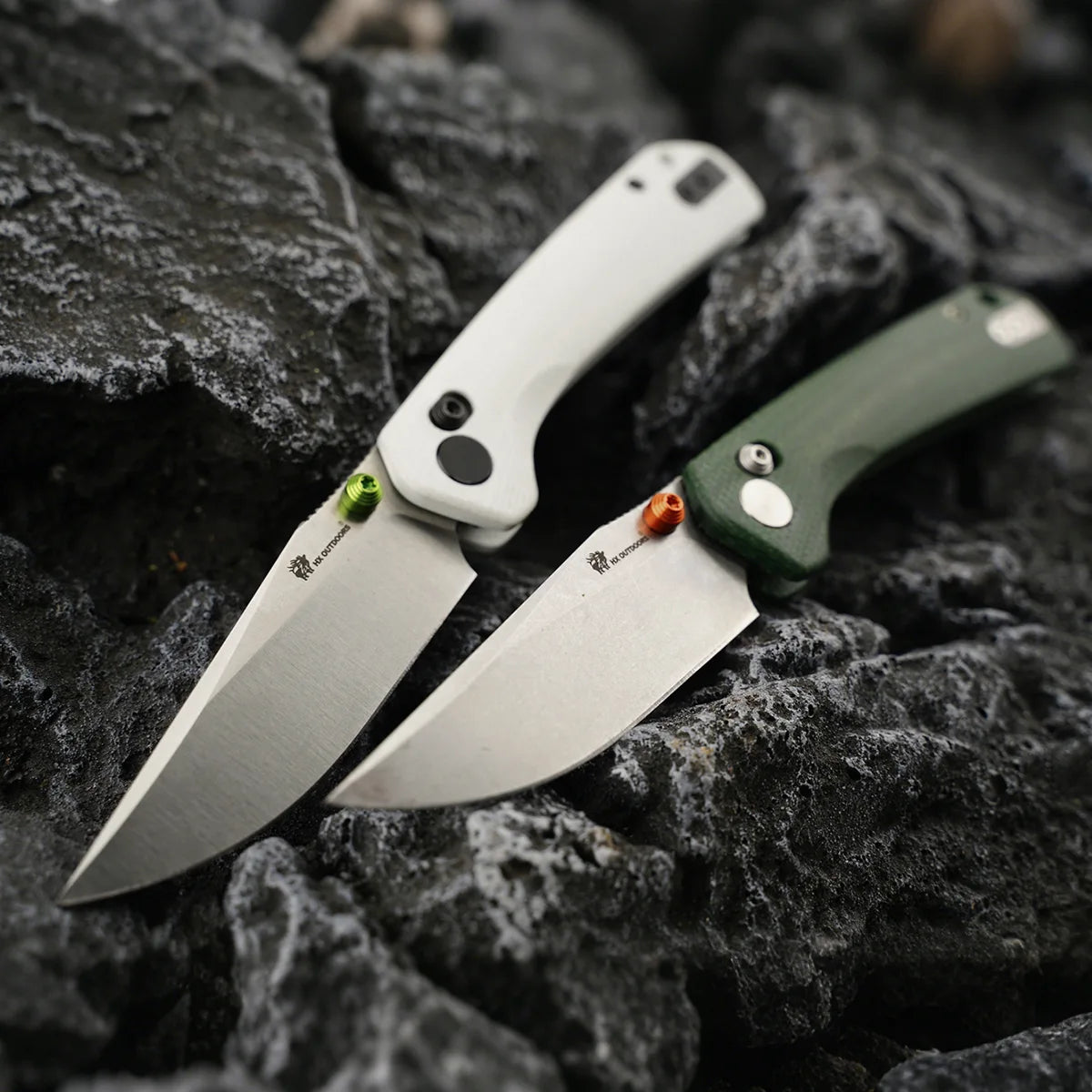
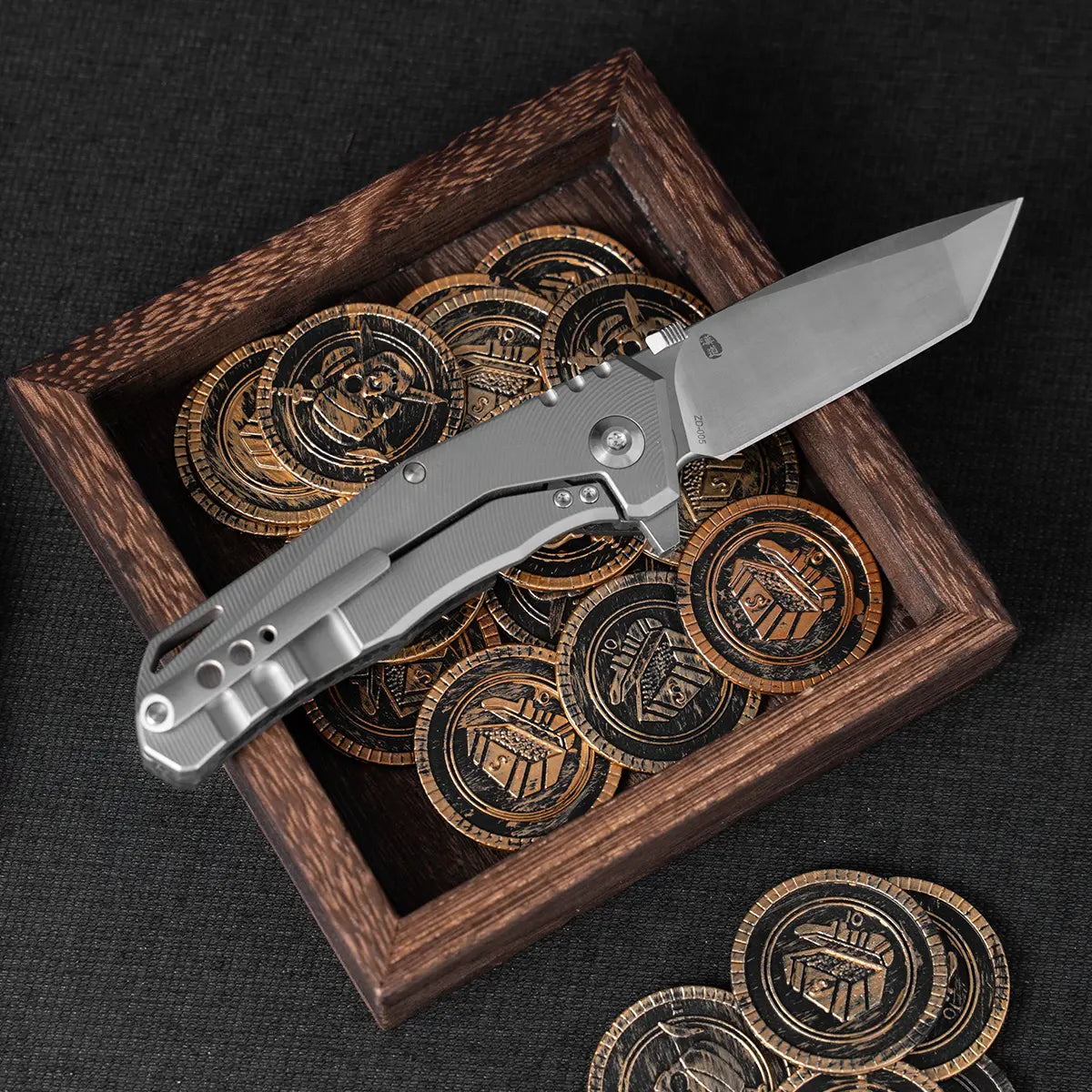
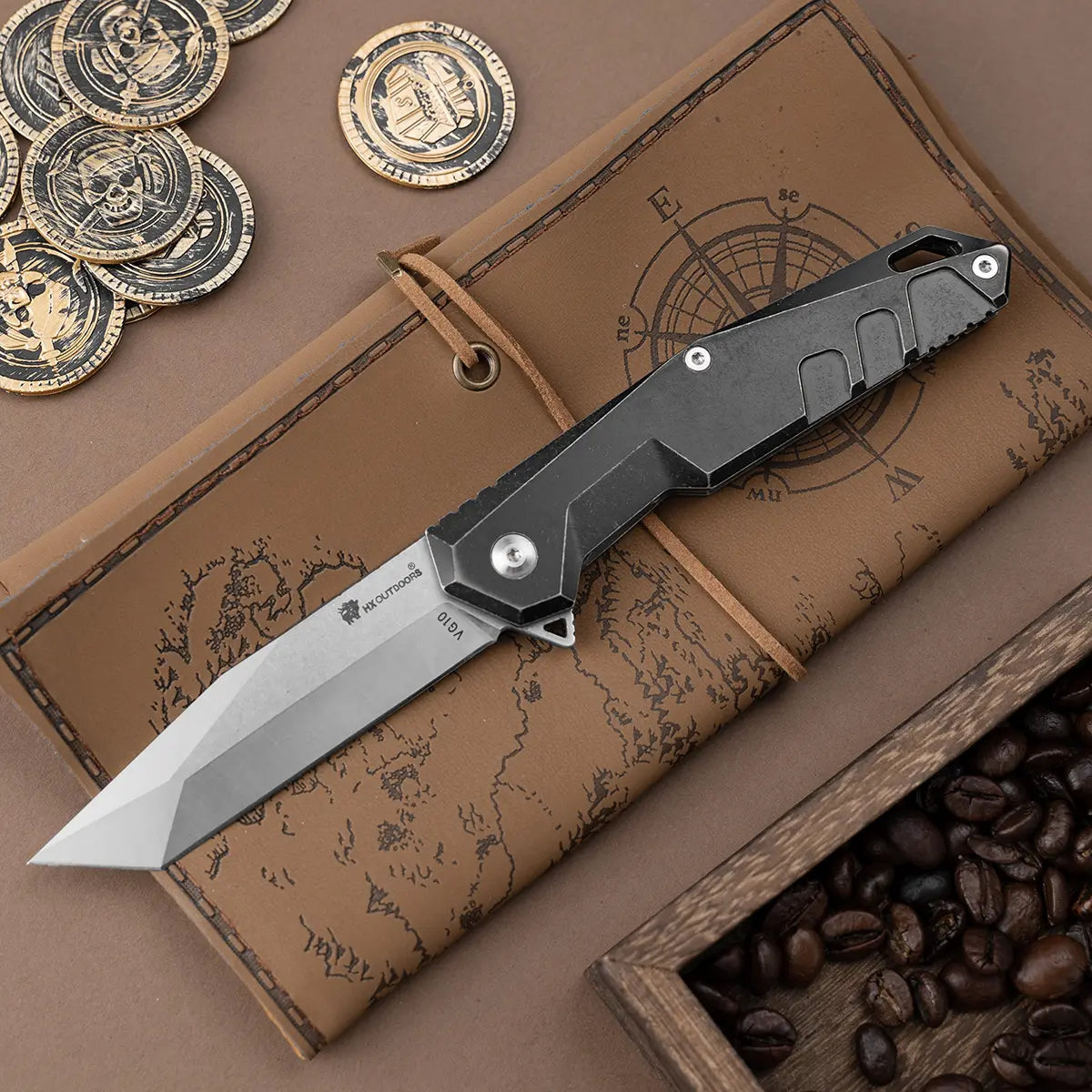
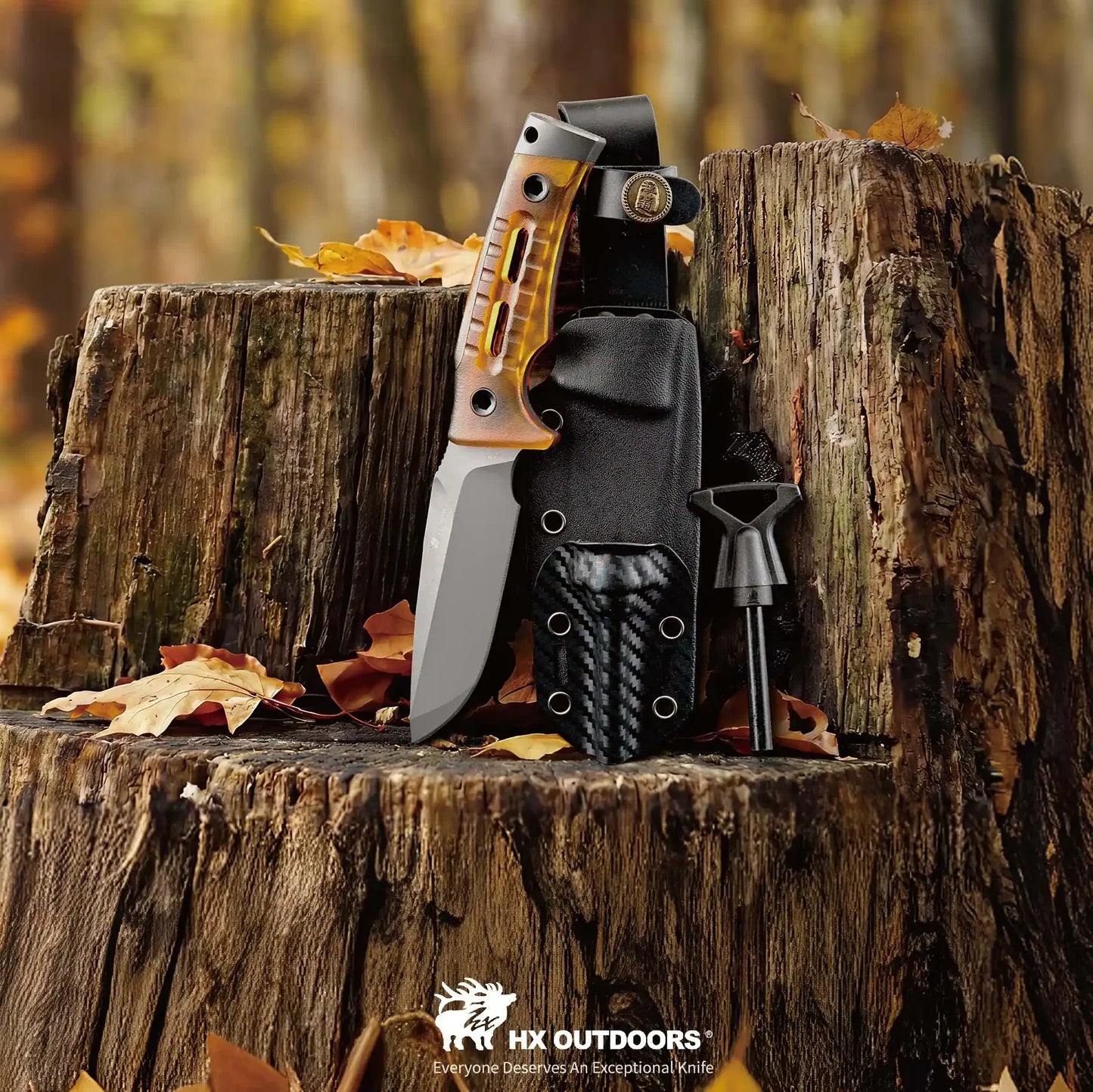




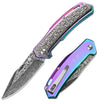
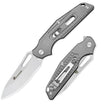
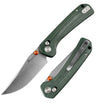
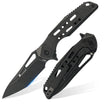
"FIT AND FINISH"
How do all those tiny parts fit together so that the knife opens smooth, closes tight, and simply makes you want to say, "Dang, that’s well done!"? That’s what fit and finish is all about. Precision edges, frictionless pivots, and a flawless look and feel are what set a superb knife apart from the rest.

BLADE AND HANDLE
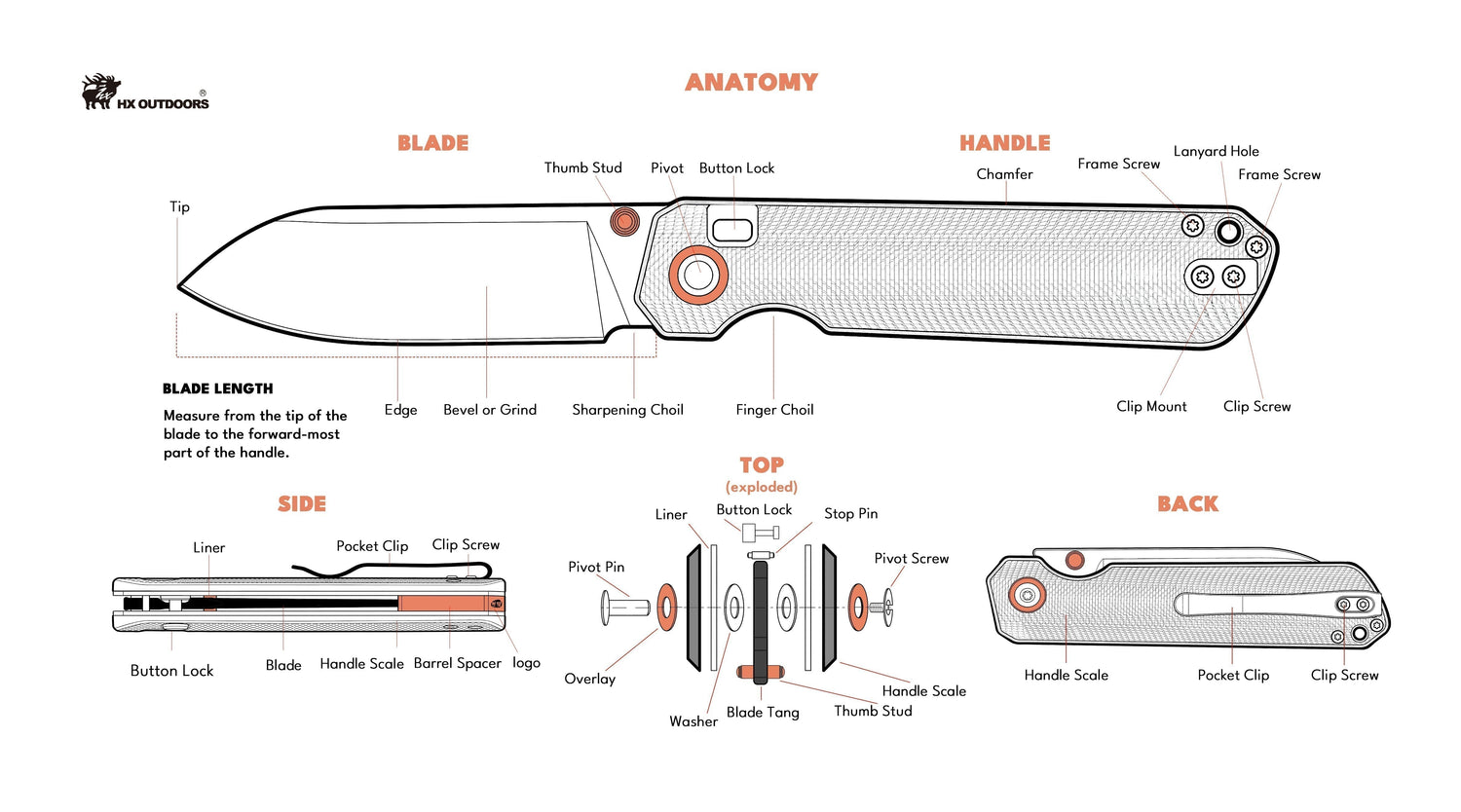
TIP: The business end. The pointy bit that gets things started, from opening boxes to poking through tape.
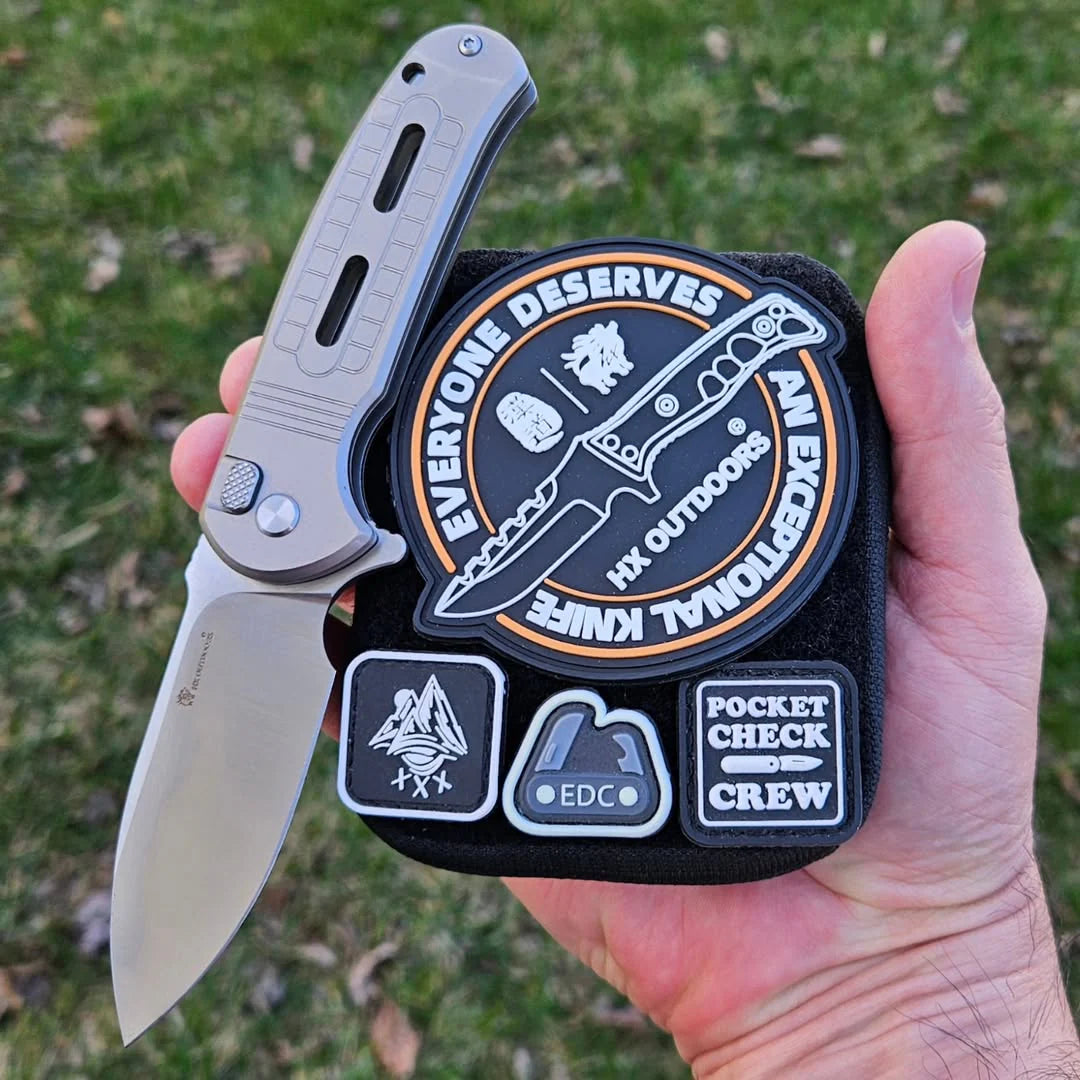
THUMB STUD: That little nub makes life easier—it lets you flick open your knife one-handed with your thumb. Trust us, you’ll miss it if it’s not there.
THUMB RAMP: The thumb’s home base. A raised, textured spot giving you extra control for delicate work or heavy pressing.
JIMPING: Ridged or notched areas on the blade or handle. Like tire treads for your thumb—grip you can feel.
PIVOT: The central joint where the blade rotates open and shut. Precision here means a buttery smooth action.
CHAMFER: The slightly rounded or beveled edge along the handle or blade. It boosts comfort and, let’s be honest, just looks slick.
FRAME SCREW: The unsung hero—keeps the whole handle sandwich together, so nothing rattles or comes apart.
LANYARD HOLE: A loop hole at the end of the handle for a paracord lanyard. Useful if you love customizing… or just want to fish your knife out with cold fingers.
EDGE: The cutting zone. The razor-thin line that does all the hard work—from slicing apples to opening letters.
BEVEL OR GRIND: The secondary slope above the edge. This part thins the blade down for better slicing, and different grinds mean different knife personalities.
BLADE LENGTH: Measured from the tip right down the middle to the start of the handle scale. Don’t forget to check your local knife laws!
SHARPENING CHOIL: That small cutout at the blade’s base makes sharpening a breeze—no accidental nicks in the handle, no headache.
LOCK: The mechanism that keeps the blade from closing on your hand. The lock is your insurance policy (and your fingers will thank you).
FINGER CHOIL: A smooth, rounded cutout for a secure grip—your index finger’s happy place when choking up for detailed cuts.
MILLING: Texturing machined into the handle or blade for both looks and handling. Ergonomics meets eye-candy.
Mastering the parts of the blade and handle is the foundation for any knife enthusiast. Knowing what each feature does empowers you to choose, use, and care for your knives with confidence. But there’s more to a pocket knife than meets the eye. Let’s look at what happens on the side view—where form and function truly come together.

SIDE VIEW
POCKET CLIP: Your knife’s parking spot. Lets you keep it handy on a pocket edge—sometimes even reversible for lefties or righties.
BLADE: Here’s where the slicing magic happens. Nestles neatly into the handle when closed for safety and stealth.
HANDLE SCALE: The "skin" of your knife. Attaches to the structural liner, brings style, and just plain feels good in hand.
LINER: The hidden internal support running under the scales. Like a knife’s skeleton—usually steel for extra strength.
BARREL SPACER: A slender tube at the back, keeping the liners apart for blade clearance. Some call it a backspacer, and yes, that’s where pocket lint goes to die.
Getting familiar with the side view components sharpens your appreciation for how every detail, from the clip to the liners, influences everyday carry. But the engineering magic doesn’t stop here. Next, we’ll take a peek at the top, where the mechanical heart of your pocket knife resides.

TOP
PIVOT PIN: The axle in your knife’s universe. Connects blade and handle at the pivot, ensuring everything rotates smoothly and stays in line.
BLADE TANG: The thick base of the blade. In a folder, it’s what contacts the lock; in a fixed blade, it tracks right through the handle (partial, tapered, or full tang—builders’ choice).
STOP PIN: The little bumper that keeps your blade from swinging too far open. Sometimes hidden, sometimes visible—always indispensable.
PIVOT SCREW: The screw holding the pivot pin in place. Want smoother or tighter action? Adjust here (carefully!).
WASHER: These flat rings live on either side of the blade, inside the pivot. They reduce friction for smooth opening—with aficionados obsessing over bronze, nylon, or even exotic materials.
Understanding the top-down architecture—pivots, tangs, and washers—lets you appreciate the sophisticated mechanics packed into such a small tool. Yet, a true enthusiast also knows the story each knife tells from back to front. Ready to discover what’s happening behind the scenes? Let’s flip things over.
BACK
Think of the knife’s back like your own—where the practical stuff lives. It’s home to the oft-unloved but totally essential elements.
SHOW SIDE: The face where you’ll find brands, logos, special editions, and the cleanest, prettiest details.
BACK SIDE: Where you’ll see pocket clip attachments and hardware—less glam, all business.
Even the back tells a tale—balancing utility and design, function and finish. Whether you’re admiring the hardware or the logo, every angle of your knife has a purpose. Now that you’ve explored all sides, you’re on your way to becoming a pocket knife pro. There’s always more to uncover in the world of blades—so keep exploring!
In exploring every facet of pocket knife anatomy
—from blade tip to handle, pivot, and all the ingenious mechanisms in between—you now know how every component combines for performance, safety, and style. Each part, no matter how small, plays a crucial role in the reliable tool you carry every day. With this knowledge, you’re ready to appreciate, use, and care for your knives on a whole new level. Keep exploring—the world of pocket knives always has more to reveal!

Dejar un comentario
Todos los comentarios se revisan antes de su publicación.
Este sitio está protegido por hCaptcha y se aplican la Política de privacidad de hCaptcha y los Términos del servicio.