




The Mechanics of Security: A Deep Dive into Locking Mechanisms
It’s time to move into the “mechanical engineering” side of the cutlery world. Locking mechanisms are the heart of a folding knife, providing the essential safety between your fingers and the edge.
1. Liner Lock
Modernized by Michael Walker, the liner lock is the cornerstone of modern EDC folders.
How it works: When you open the blade, the metal liner—cut to act as a leaf spring—snaps under the tang of the blade. This physical barrier prevents the blade from closing. To unlock it, the user must manually push the liner leaf to the side, clearing the path for the blade to return to the closed position. The Liner Lock offers a slim, lightweight profile and ease of one-handed operation, making it the most ubiquitous lock in the industry.
2. Frame Lock
Often referred to as a “Reeve Integral Lock” (RIL), this design was popularized by Chris Reeve and is known for its heavy-duty performance.
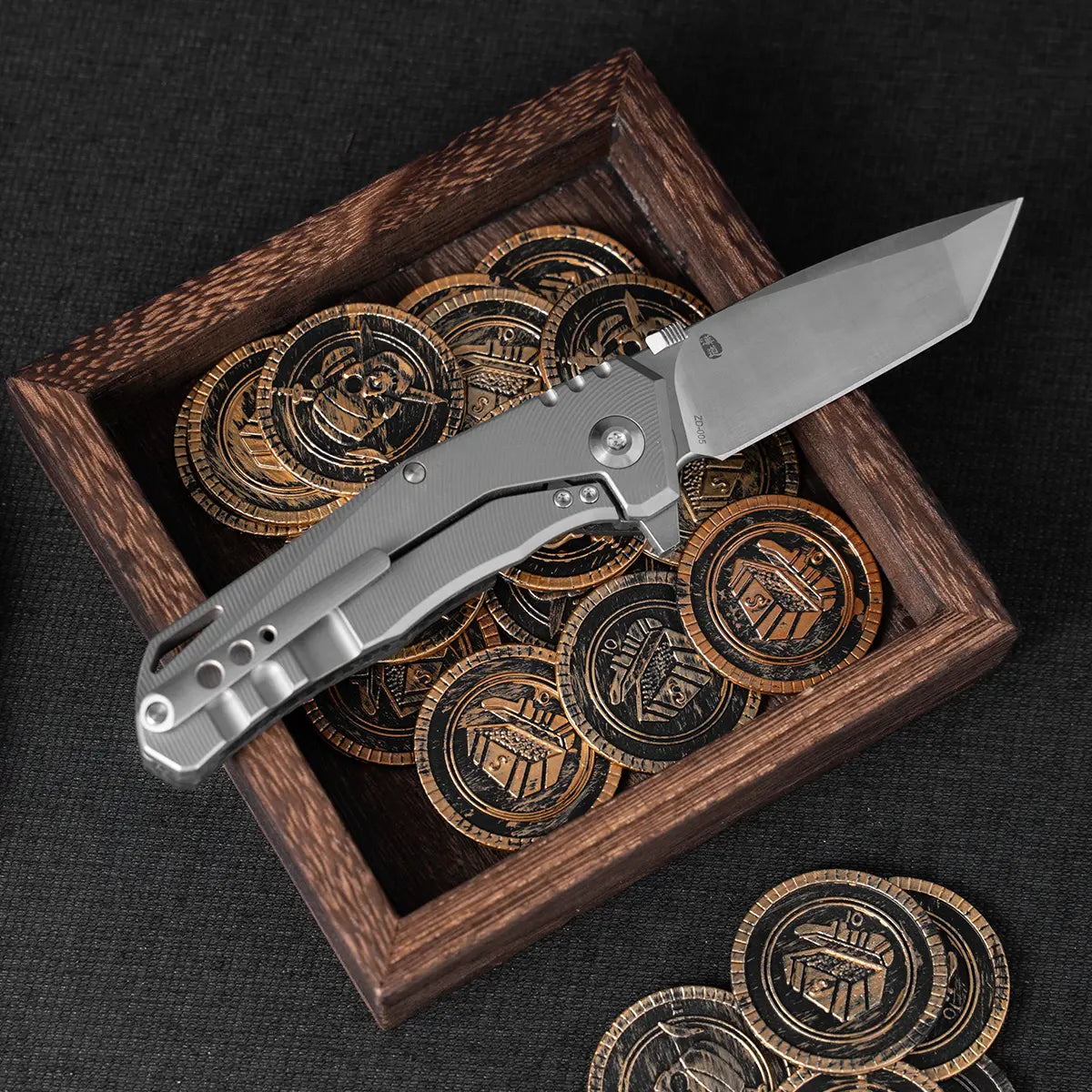
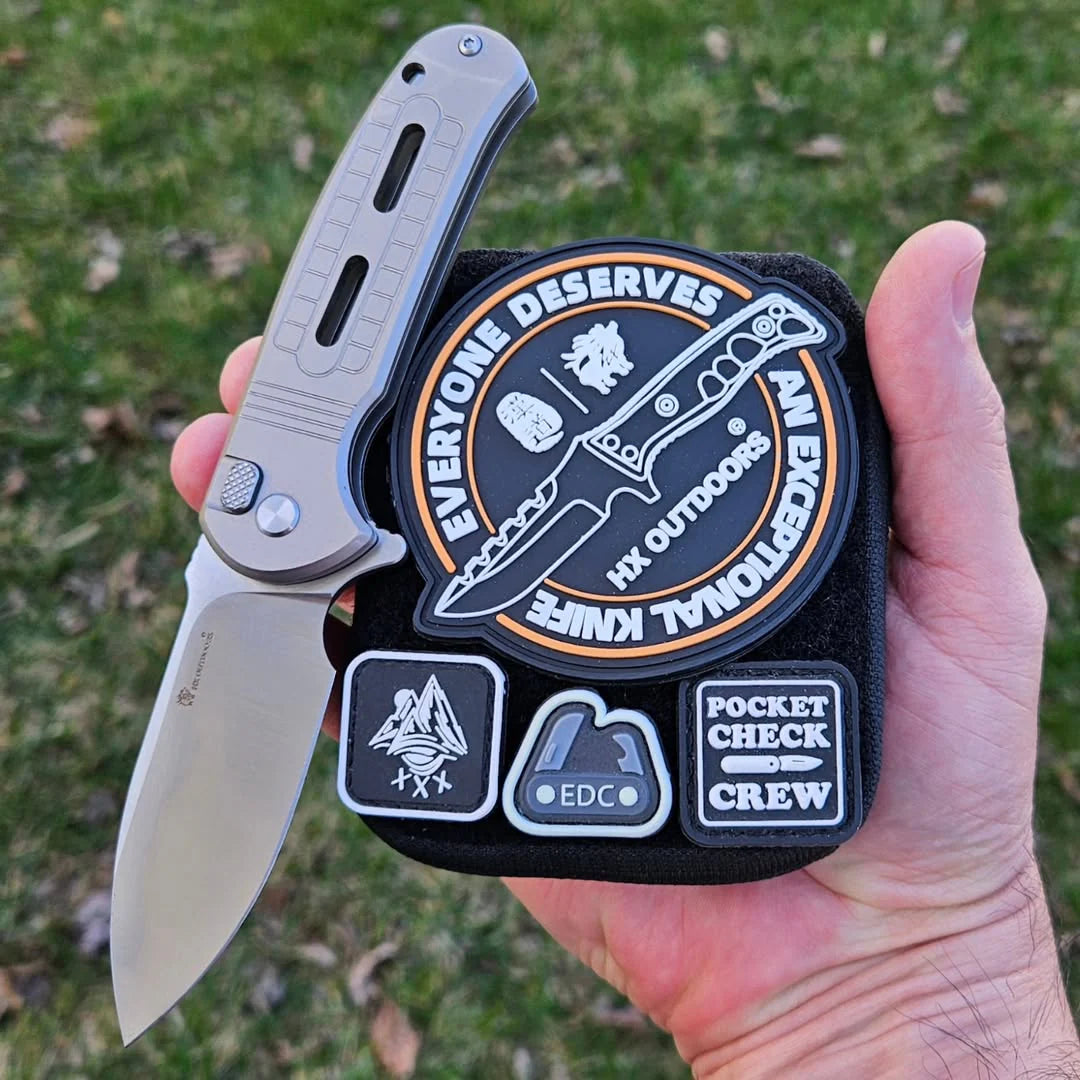
How it works: The frame lock functions identically to the liner lock, but with one major difference: it uses a structural portion of the thick handle scale itself as the locking leaf. Because the material is significantly thicker, it provides immense strength. In many designs, gripping the handle actually increases the security of the lock against the lock bar.
By utilizing the handle scale as the locking mechanism, the Frame Lock achieves superior structural integrity and durability.
3. Crossbar Lock
Widely recognized for its incredible smoothness and ambidextrous functionality, this lock uses a sliding tension system.
How it works: This mechanism relies on two Omega-shaped springs that provide constant tension to a cylindrical crossbar. When the blade is opened, the springs snap the crossbar into a machined notch on the blade’s tang. By pulling the crossbar back through the guide slots, the tension is released, allowing the blade to swing freely.
The Crossbar Lock is celebrated for its unmatched fidget factor and ambidextrous ease of use.
4. Button Lock
Commonly found on automatic knives and high-end folders, the button lock is prized for its fast, intuitive operation.
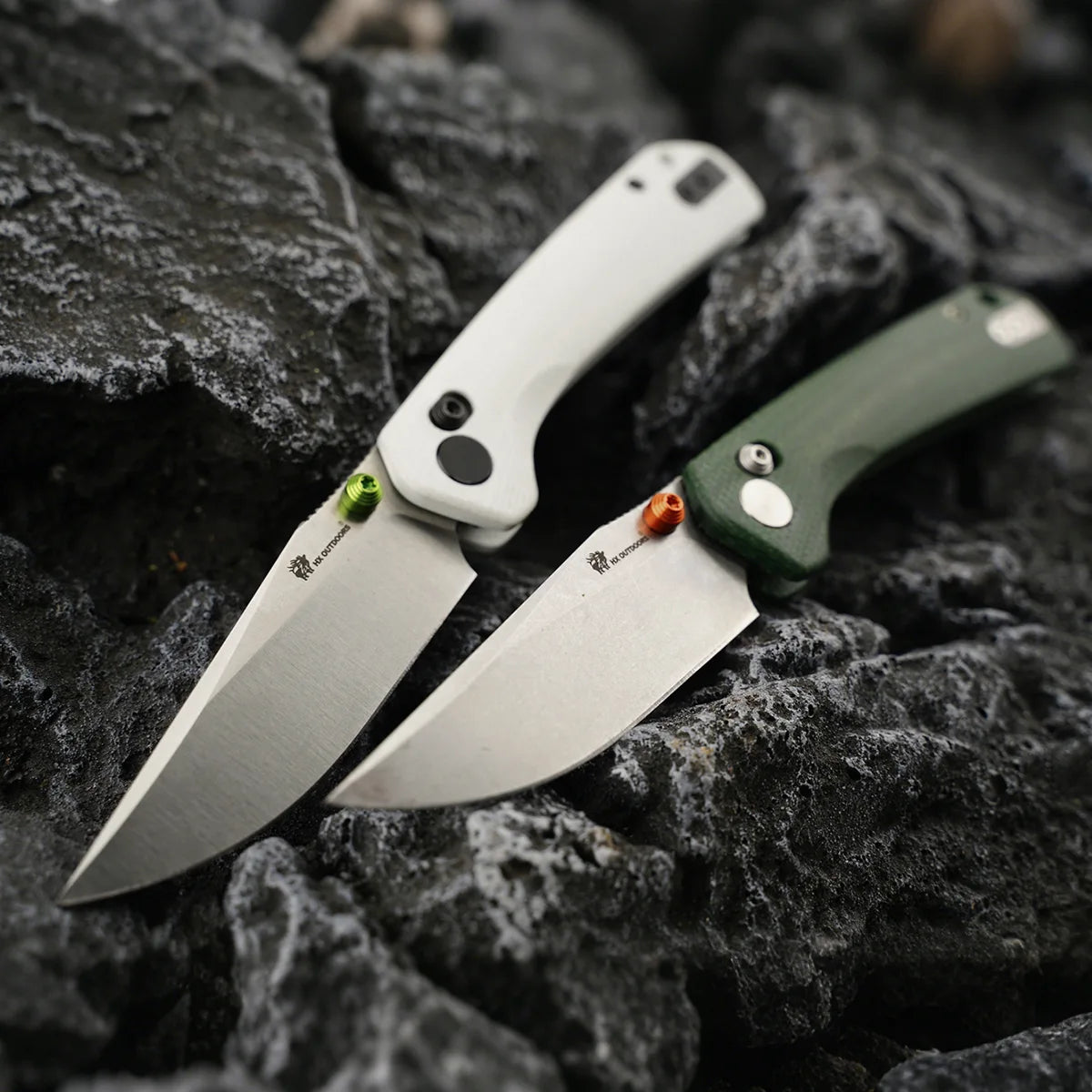
How it works: The button lock uses a spring-loaded cylindrical plunger that sits perpendicular to the blade. When the blade is deployed, the coil spring forces the plunger into a machined hole or notch on the tang of the blade, physically locking it in place. Pressing the button compresses the coil spring, retracting the plunger and disengaging the lock.
The Button Lock provides a clean, user-friendly interface that allows for rapid deployment and closure.
5. Slip Joint
The slip joint is the quintessential “classic” mechanism, found on traditional pocket knives and multi-tools for over a century.
How it works: Unlike the locks above, the slip joint does not “lock” in the mechanical sense. Instead, it uses a sturdy metal backspring that presses against a flat section of the blade tang. It provides enough resistance to hold the blade open during cutting tasks, but it can be closed with a firm push. A “half-stop” is often built-in, catching the blade halfway as a safety feature to prevent it from snapping shut on your fingers.
The Slip Joint is the ultimate choice for legal compliance and timeless aesthetics, offering a “non-locking” simplicity that feels safe and unobtrusive.
--Which Lock Reigns Supreme?
Whether you value the ultra-slim profile of a Liner Lock, the bomb-proof structural integrity of a Frame Lock, the butter-smooth, ambidextrous agility of a Crossbar Lock, or the lightning-fast, intuitive engagement of a Button Lock, each system represents a different mastery of tension and geometry.
What’s your go-to locking mechanism for your daily carry? Drop a comment below and let us know!

Dejar un comentario
Todos los comentarios se revisan antes de su publicación.
Este sitio está protegido por hCaptcha y se aplican la Política de privacidad de hCaptcha y los Términos del servicio.